Trust without clarity
Your dog may feel connected but still not understand what you expect.
THE GAMARADA APPROACH
Three questions help me understand what your dog needs—and where the training should begin.
These three ideas work together in the walk, the play, the rest, and the small decisions that shape your dog’s day.
WHY ALL THREE MATTER
One piece can’t do the job of all three. I look at the whole picture when a dog is struggling.
Your dog may feel connected but still not understand what you expect.
Your dog may obey while still feeling frustrated, anxious, or overstimulated.
Your dog may be having fun while still feeling responsible for every decision.
TRUST
A dog can love you and still feel responsible for making every decision.
Trust grows when your dog repeatedly experiences you as fair, consistent, predictable, and able to handle a situation.
For a reactive or nervous dog, that means manageable practice and the message: “I don’t have to handle everything. My handler can make that decision.”
It comes from what your dog experiences with you over and over—not from a single lesson.
TRUST / REACTIVITY
Your dog may know every command at home, but real life can be different. If they’re nervous or overwhelmed, they may not be able to concentrate. A balloon pops, a strange noise happens, and suddenly that solid recall is gone.
That kind of trust comes from practice and experience in real situations—not just repeating commands in places that already feel easy.
FULFILLMENT
The answer isn’t always a longer walk or another command.
Dogs need appropriate opportunities to sniff, explore, play, move, socialize, rest, and use their brain. Those outlets are central to the way I train.
The goal is to meet the dog’s needs, not simply exhaust them. A dog with room to be a dog is often more able to settle, listen, and learn.
CLARITY
Dogs understand patterns. Consistency helps those patterns make sense.
Clarity means understandable boundaries, consistent expectations, good timing, and enough repetition to learn.
A dog who responds in your living room may not understand the same expectation at a park, store, busy sidewalk, or around another dog. I build the skill, then practice it in environments the dog can handle.
The expectation should not disappear when the environment changes. I teach you the handling and timing that keep the message clear.
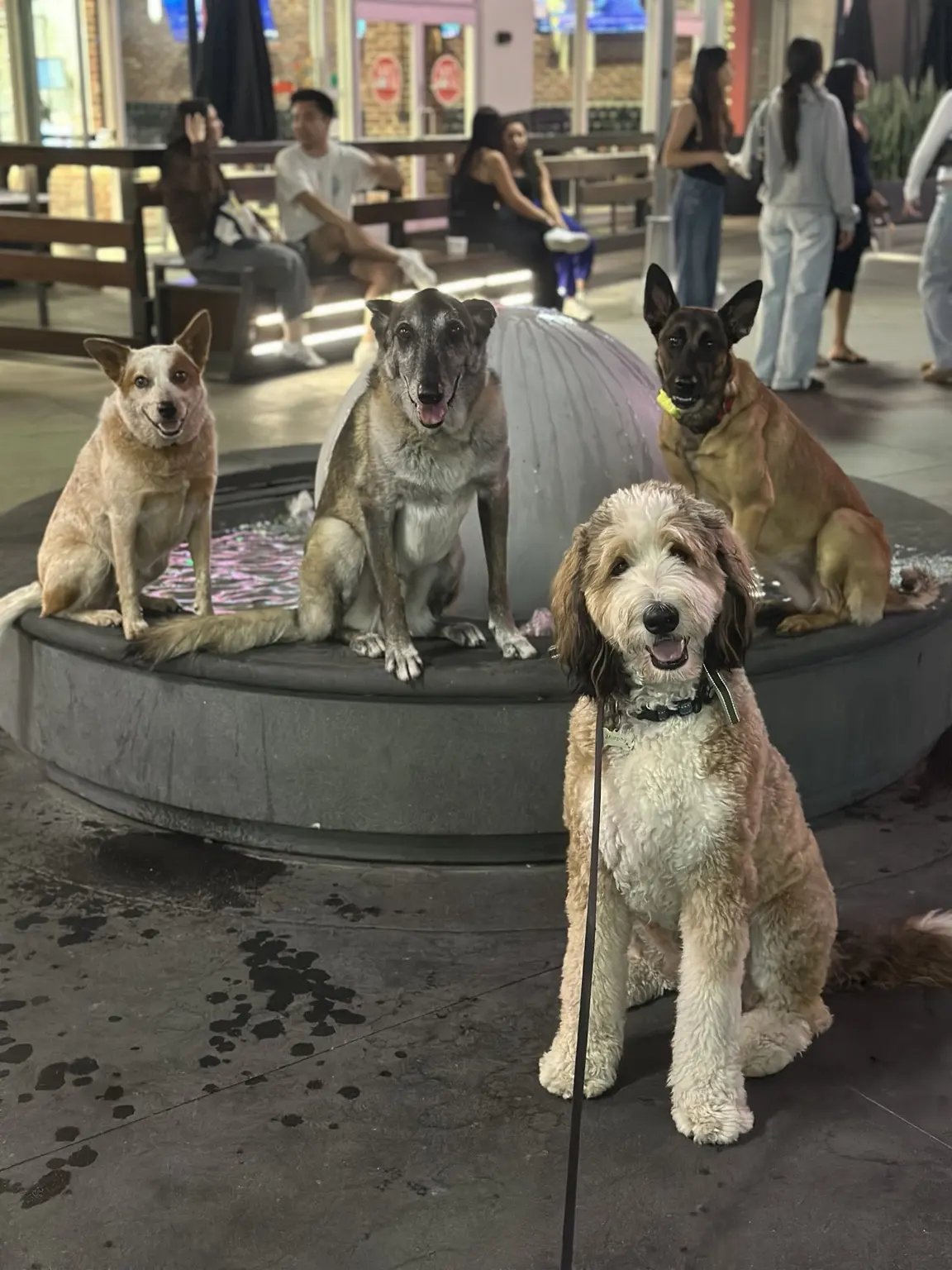
MY MENTOR DOGS
One of the most meaningful parts of the Gamarada program.
My experienced dogs are fair communicators and some of the most important teachers in my training process. A dog learning to walk calmly, explore with confidence, or share space can benefit from being alongside a dog who already knows how.
They help model neutrality, respectful play, appropriate public behavior, and social boundaries—including what it looks like when another dog wants space.
I watch those interactions closely, choose appropriate introductions, and step in when a training dog doesn’t understand another dog’s signals. It’s guided social learning, not “let the dogs figure it out.”
MENTOR DOGS / TRUST
This is Mischa meeting Sarge for the first time. For a nervous or reactive dog, a calm introduction can be an important step toward feeling more comfortable around another dog.
I stay involved and guide the interaction so Mischa has time to read Sarge’s signals, make good choices, and build confidence.
YOUR NEXT STEP
What’s going well? What’s been difficult? What would you love to be able to do together? Let’s start there.
Start with the questionnaire and I’ll follow up directly about your dog, your goals, and the best next step.
Fill out my questionnaire San Fernando Valley & surrounding areas